In today’s apparel market, driven by brand differentiation and rapid product launches, choosing a stable and reliable custom T-shirt manufacturer is no longer just “finding a supplier,” but a crucial decision directly impacting product quality, delivery efficiency, and the brand’s long-term development. Whether you’re an e-commerce brand, a brick-and-mortar apparel wholesaler, or a client requesting customized clothing for an event, you’ll face the same challenge: how to sift through the numerous shirt printing manufacturers to find a partner with genuine production and service capabilities.
Next, we will systematically analyze the key capabilities a superior custom t-shirt manufacturer should possess, considering five dimensions: factory strength, service system, core advantages, process control, and practical selection methods. We will also combine Heyisenlin’s actual manufacturing experience to help you establish clear judgment criteria.
Heyisenlin Factory Strength
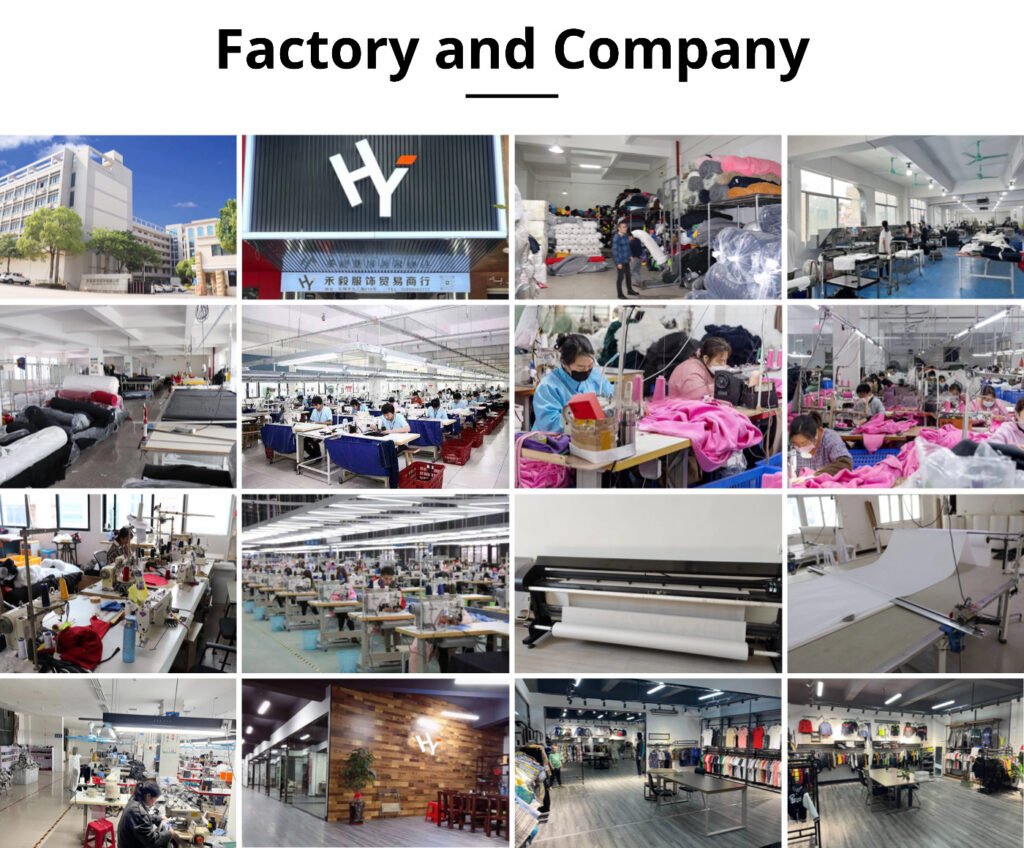
For most buyers, evaluating a factory cannot be limited to “scale data,” but requires a deeper understanding of its actual production organization capabilities. Heyisenlin boasts approximately 5 years of experience in custom T-shirt production, with a factory area of about 8,000 square meters, approximately 100 employees, and 60 production machines. The significance of these fundamental conditions lies not in the numbers themselves, but in how they support stable production.
In the actual production process, quality control begins as soon as the fabric enters the warehouse. The factory typically conducts basic inspections of the fabric, including weight, color difference, and hand feel consistency. After entering the cutting stage, the fabric is processed in batches according to different order requirements to avoid material mixing or size deviations. The printing process is the most crucial part of custom T-shirts. Heyisenlin employs a separate production line method in this stage, managing different processes (such as screen printing and heat transfer printing) separately to reduce cross-contamination and process interference.
The sewing stage emphasizes a balance between efficiency and stability. An experienced sewing team can control stitch density and pattern consistency while ensuring speed. Before packaging, the final finished products undergo a garment re-inspection, including size measurement, print placement verification, and appearance inspection.
At the delivery level, established factories typically employ a production scheduling mechanism, arranging production sequence based on order priority and complexity. This avoids the problem of “rushing production leading to quality degradation” while ensuring the stability of bulk order delivery dates. This is especially important for long-term cooperative clients.
What are the core OEM & ODM services offered by custom T-shirt manufacturers?
From the customer’s perspective, custom T-shirt services can be divided into OEM and ODM models, and high-quality manufacturers often flexibly combine both.
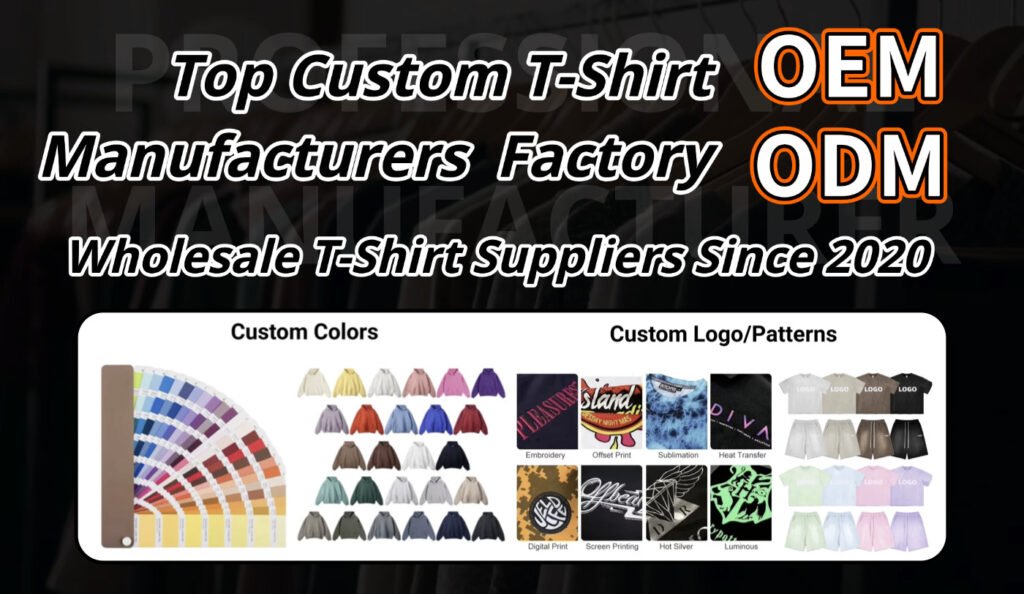
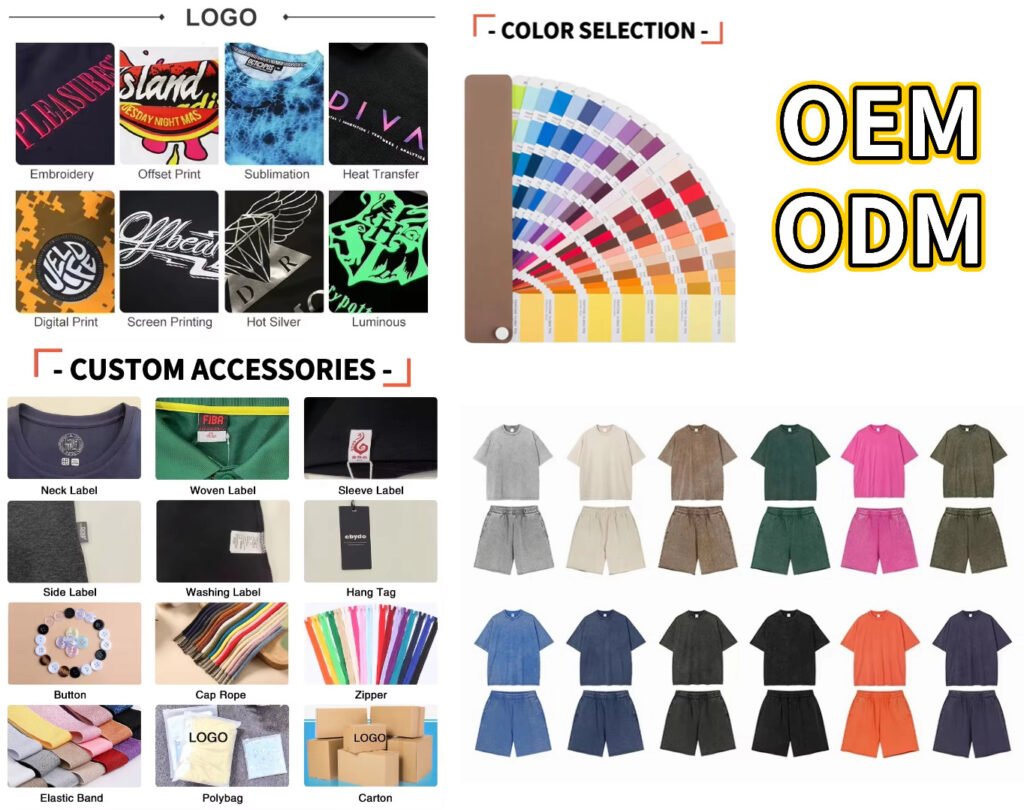
OEM services are typically suitable for customers who already have a design. After the customer provides their logo or pattern, the factory will select a suitable printing process based on the pattern’s characteristics. For example, for large-area monochrome patterns, screen printing is usually recommended to reduce costs; while for complex gradient patterns, digital direct-to-garment printing or heat transfer printing is more suitable. Then, in the sampling stage, the customer can confirm the color, size, and overall effect through physical samples.
ODM services lean more towards “collaborative development.” For customers without a complete design, the factory can provide pattern suggestions, fabric selection, and pattern optimization solutions. For example, recommending different weights of cotton or blended fabrics based on the target market’s climate conditions, while adjusting the pattern proportions according to the wearing scenario.
In terms of specific customization, it typically includes the following aspects:
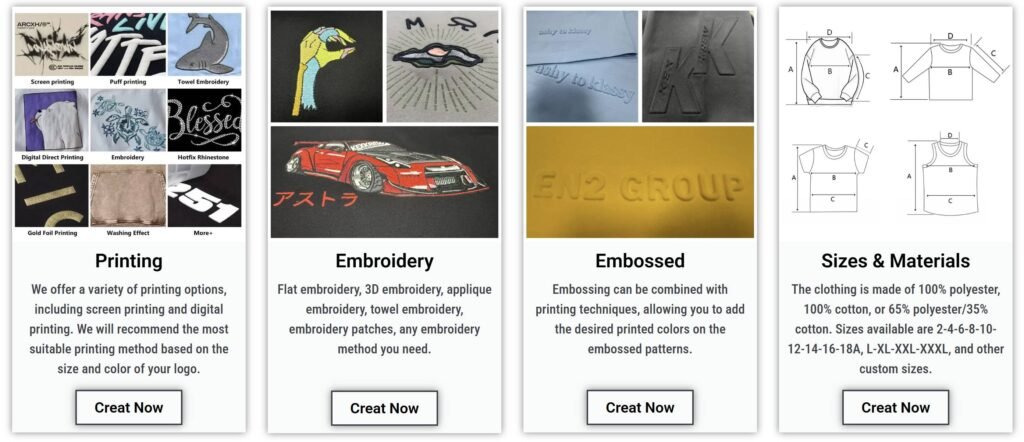
- Pattern customization: printing, embroidery, or a combination of multiple processes
- Fabric selection: pure cotton, polyester-cotton blends, or functional fabrics
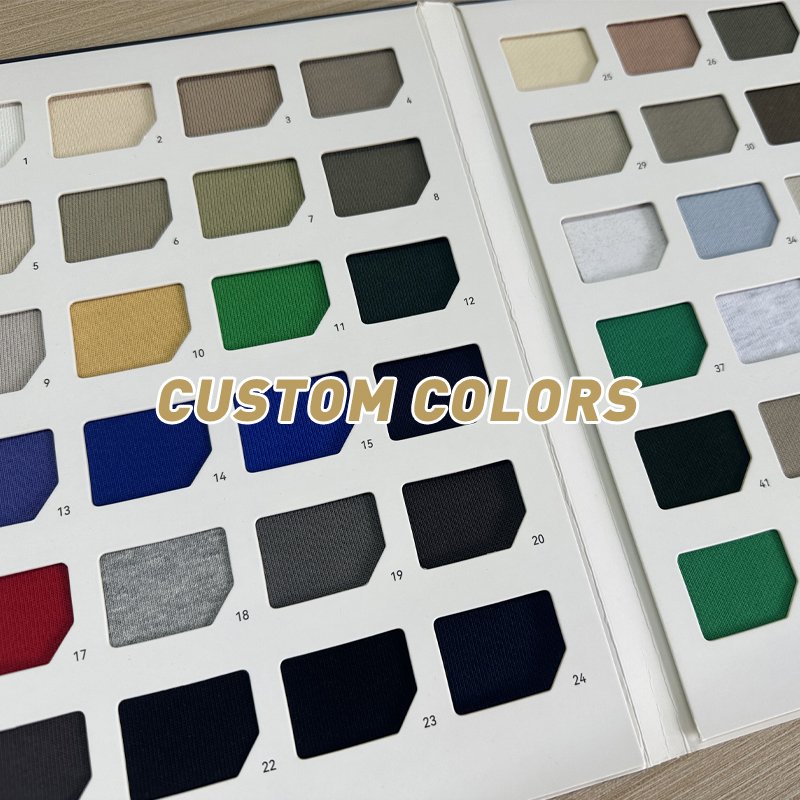
- Color control: standardized matching using Pantone color charts
The sampling process is a crucial link between design and production. Established factories usually control the sampling cycle within a reasonable range and support a limited number of revisions to ensure that the customer completes all confirmations before mass production.
Analysis of Core Competitive Advantages Compared to Peers
When selecting a custom t-shirt manufacturer, simply comparing prices is far from sufficient. The real difference often lies in attention to detail and overall capabilities.
First, there’s printing consistency. Color consistency within the same batch of products is a crucial indicator of a factory’s skill level. Experienced manufacturers ensure consistency across production periods by recording ink ratios and controlling equipment parameters.
Second, there’s production flexibility. Some factories can only handle large-volume orders and lack small-batch production capabilities, which is unfavorable for startups or test products. Factories with flexible production capabilities can switch between different order sizes.
Regarding cost control, excellent factories don’t simply lower prices; they achieve reasonable pricing by optimizing production processes and reducing waste. For example, they reduce fabric waste through proper layout or lower printing costs through process matching.
Communication efficiency is also a key factor. From requirement confirmation to sample feedback, response speed directly impacts project progress. Mature suppliers typically have clear communication processes, enabling them to quickly understand customer needs and provide actionable solutions.
Key Points of Custom T-shirt Printing Technology and Quality Control
Among all factors affecting the quality of the finished product, the selection and control of the printing technology is particularly crucial. Different technologies are suitable for different scenarios, and inappropriate selection often leads to wasted costs or quality problems.
Screen printing is suitable for mass production, featuring stable costs and rich colors, but it is not suitable for complex gradient patterns. Digital direct-to-garment printing (DTG) can achieve high-precision pattern output, suitable for small batches or diversified designs. Heat transfer printing has advantages in detail rendering, especially suitable for functional patterns or special materials.
Quality assessment should not stop at appearance; the following aspects also need to be considered:
Color fastness: The ability of the print to retain color after washing.
Adhesion: Whether the pattern is prone to peeling or cracking.
Detail rendering: Whether the edges are clear and whether there is any bleeding.
The matching relationship between the fabric and the print is also very important. For example, if an unsuitable printing technology is used on a high-elastic fabric, it is prone to cracking during stretching. Therefore, conducting small-sample testing before production is a key step to avoid risks associated with mass production.
In terms of quality control, standardized factories typically set up three key points: pre-print testing, in-production sampling, and pre-shipment re-inspection. This phased control approach can effectively reduce the probability of batch problems.
How to Choose a Suitable Custom T-shirt Supplier
For the buyer, the supplier selection process can be systematically broken down into several key steps.
First, it’s necessary to clarify your own needs, including product usage, budget range, and expected quantity. Different application scenarios have significantly different requirements for quality and cost. For example, brand sales usually focus more on details and quality, while event customization emphasizes cost-effectiveness and delivery time.
Next, it’s recommended to compare 3 to 5 suppliers. At this stage, you shouldn’t only focus on the price, but should focus on evaluating the sample quality. Samples can directly reflect the factory’s actual production level, including the fabric feel, printing effect, and overall workmanship.
Regarding tools, Pantone color charts are an important standard for color communication, effectively avoiding color difference disputes. For fabrics, weight and quality can be judged by actual weighing and feel. Print quality can be verified for durability through a simple washing test.
Finally, it is recommended to place a small-batch trial order before the official mass production. This not only verifies the factory’s actual delivery capabilities but also helps identify potential problems, thereby reducing risks.
Common risks include discrepancies between samples and mass production, delivery delays, and communication misunderstandings. These problems can be effectively avoided through preliminary testing and clearly defined communication standards.
| Start Your order | Thomas@heyisenlin.com |
Among numerous shirt printing manufacturers, those truly valuable for long-term partnerships often possess not only a well-established production system but also stable support in communication, service, and quality control. Heyisenlin, through its mature production processes and flexible customization services, can meet the diverse needs of clients seeking a balance between quality and efficiency.
For those looking for a custom t-shirt manufacturer, establishing a clear set of evaluation criteria will help you make more rational choices in a complex supply chain environment and lay a solid foundation for brand development.