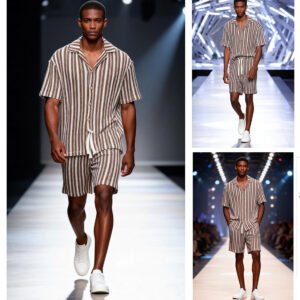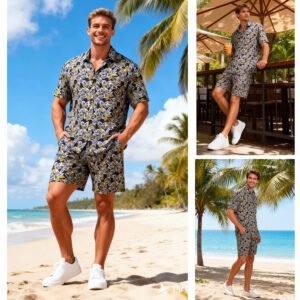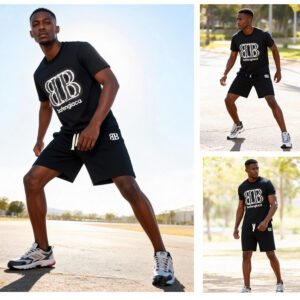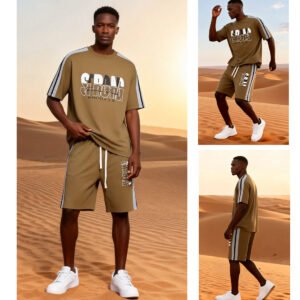
Heyisenlin’s OEM & ODM Customization Capabilities
In the wholesale custom hoodie and sweatpants set, what truly differentiates manufacturers is not whether they “support customization,” but rather whether their customization capabilities are systematic and scalable.
Heyisenlin has long focused on producing hoodie and T-shirt sets, establishing clear and mature execution logic for both OEM and ODM cooperation models.
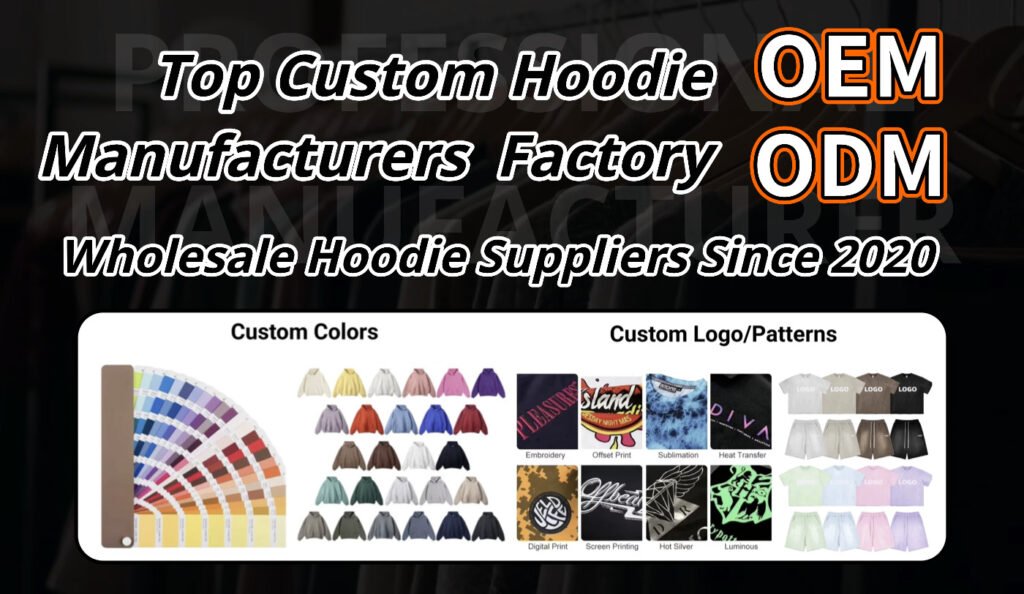
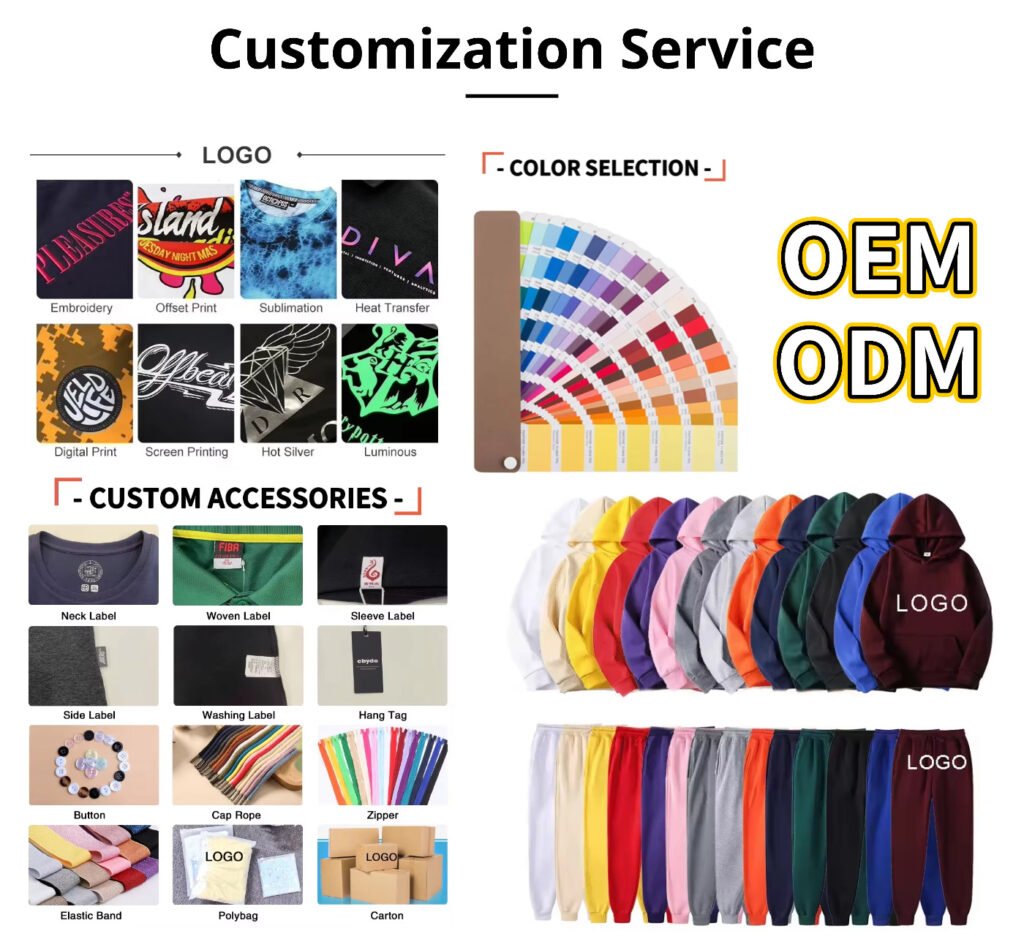
Regarding OEM customization, Heyisenlin emphasizes “design fidelity and batch consistency.” Common OEM customization services include, but are not limited to:
- Logo customization: embroidery, screen printing, plastisol printing, direct digital printing
- Precise control of pattern size and position
- Color customization: color matching based on the Pantone international color chart
- Specification of fabric composition, weight, and feel
- Customization of hangtags, care labels, and packaging methods
In practice, Heyisenlin ensures that designs are not “weakened” in mass production through three stages: sample confirmation, pre-production sample confirmation, and bulk order consistency verification. This process structure is highly consistent with the production management methods commonly used by international apparel brands.
Regarding ODM customization, Heyisenlin not only provides production services but also participates in product planning based on market experience, such as:
- Suggestions on suit proportions (visual coordination between hoodies and sweatpants)
- Size adaptation for different markets (North America, Europe, Asia)
- Suggestions on balancing fabric costs and retail prices
This ODM model is particularly suitable for cross-border e-commerce brands, startup apparel brands, or clients who wish to quickly test the market.
Fabric, Fit, and Craftsmanship: The Key to Success or Failure of Hoodie and Sweatpants Sets
For matching outfits, the consumer’s actual experience often comes from three aspects: wearing comfort, visual harmony, and post-wash stability. These three points almost entirely depend on the fabric, fit, and craftsmanship.
Regarding fabric selection, Heyisenlin commonly uses combed cotton, cotton-polyester blends, terry cloth, and fleece for its hoodies and sweatpants.
According to industry research data published by Textile Exchange, cotton-polyester blends perform more consistently in terms of washability and deformation resistance, making them particularly suitable for repeat purchase markets and bulk sales channels.
In terms of fit, the “matching” of the hoodie and sweatpants is crucial.
If the top is too loose while the pants are too tight, or if the pant length ratio is unbalanced, it will directly affect the consumer’s evaluation of the entire outfit. Heyisenlin has accumulated a mature database of matching patterns through long-term production, allowing adjustments to be made according to different national sizing systems, reducing the risks of cross-market sales.
At the craftsmanship level, details are often more important than specifications. For example:
- The resilience of the collar, cuffs, and trouser hems
- The uniformity of stitch density
- The neatness of the internal overlocking.
These seemingly insignificant details are precisely what determine whether a product “looks high-end and feels comfortable to wear.”
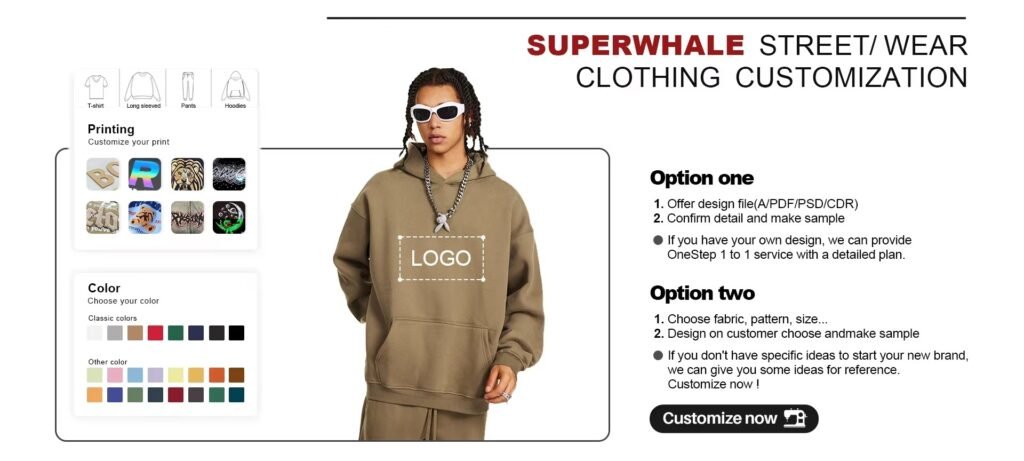
How does an 8000㎡ modern factory ensure stable delivery and quality?
Heyisenlin boasts an 8000㎡ modern factory with clear internal divisions, covering the complete production process including cutting, sewing, printing, ironing, and packaging.
Five years of continuous production experience gives Heyisenlin a strong ability to handle different order types, including:
- Bulk custom orders
- Simultaneous production of multiple styles
- Concentrated delivery needs during peak seasons.
The factory currently has 100 stable employees and 60 professional production machines, enabling it to achieve stable delivery times while ensuring quality.
Compared to factories that frequently outsource or use temporary workers, this personnel and equipment structure is more conducive to long-term cooperation.
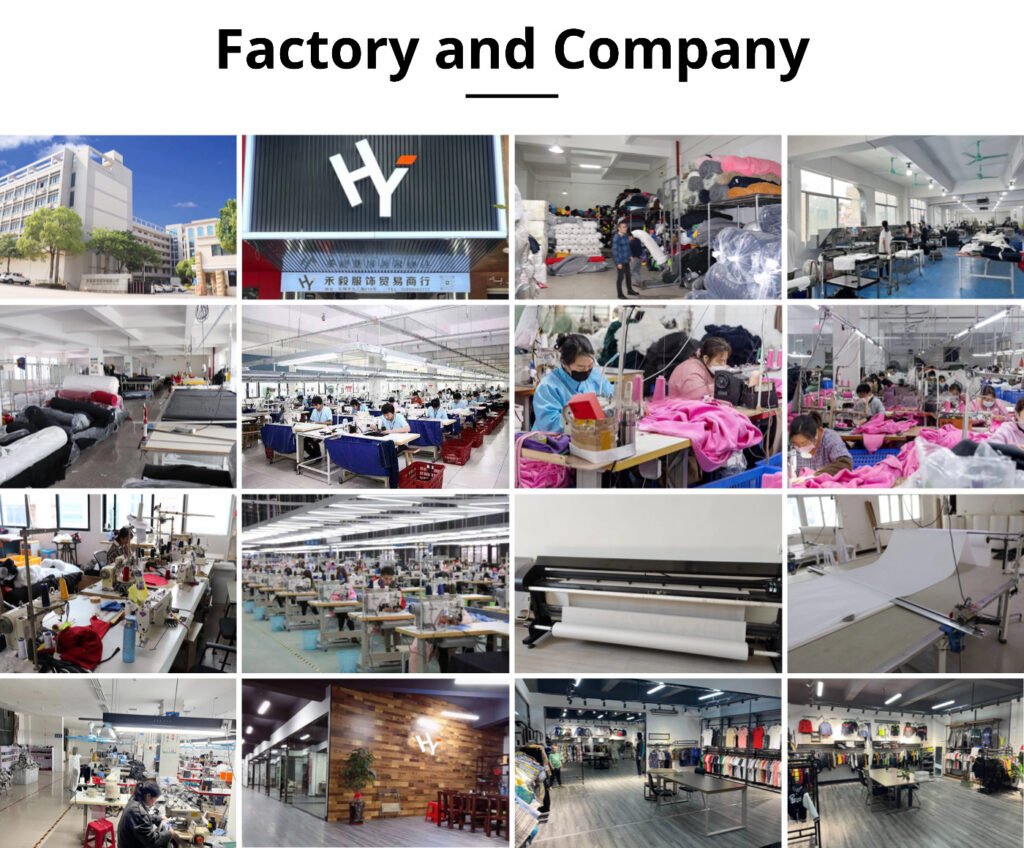
From Sampling to Mass Production: A Complete and Executable Wholesale Customization Process
To avoid the common problems of repeated modifications and information discrepancies during the customization process, Heyisenlin has established a clear customization process:
First, confirm product requirements with the client, including the target market, quantity, style positioning, and budget range.
Then, proceed to the fabric and process suggestion stage, where the factory provides feasible solutions based on experience.
The sampling stage is the most critical link in the entire process.
Heyisenlin will make necessary adjustments based on client feedback until the sample is confirmed to be correct before proceeding to the pre-production sample (PP Sample) confirmation.
During mass production, the factory will conduct phased quality checks to ensure that the finished product is consistent with the sample, and finally complete packaging and shipping.
The core goal of this process is singular: to reduce communication costs and increase first-pass yield.
Quality Control, Testing Standards, and Industry Data Support
In terms of quality management, Heyisenlin refers to internationally accepted apparel sampling and production control logic, such as AQL sampling methods.
In actual production, we focus on the following aspects:
- Size error control
- Color difference range control (based on Pantone standards)
- Sewing and print fastness
According to SGS’s quality management research, systematic sampling and node inspection can significantly reduce batch return rates. This is one of the core reasons why Heyisenlin has consistently adhered to its quality processes.
| Start Your order | Thomas@heyisenlin.com |
For brands and wholesalers, choosing a custom hoodie manufacturers is not primarily about the price of a single order, but rather about whether they have a foundation for long-term, stable cooperation.
Heyisenlin provides customers with stable and replicable customization solutions through a clear customization process, a mature factory system, and sustainable production capabilities, helping products continue to sell in the market.