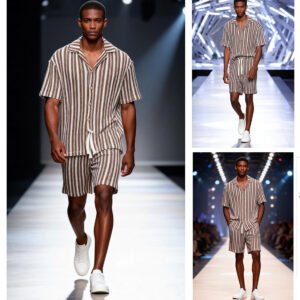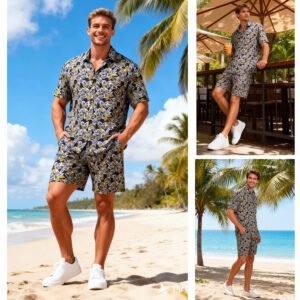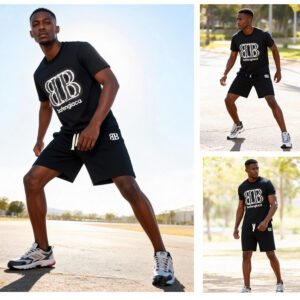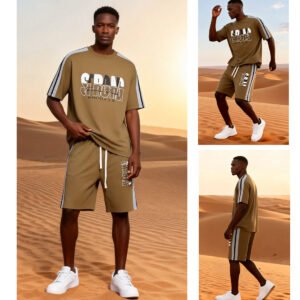
According to a market research report published by Grand View Research, the global custom apparel market is experiencing continuous growth, with personalized and small-batch customization becoming a significant trend in brand development. This means that choosing a reliable custom t-shirt manufacturer or supplier not only affects product quality but also directly impacts brand reputation and long-term profits.
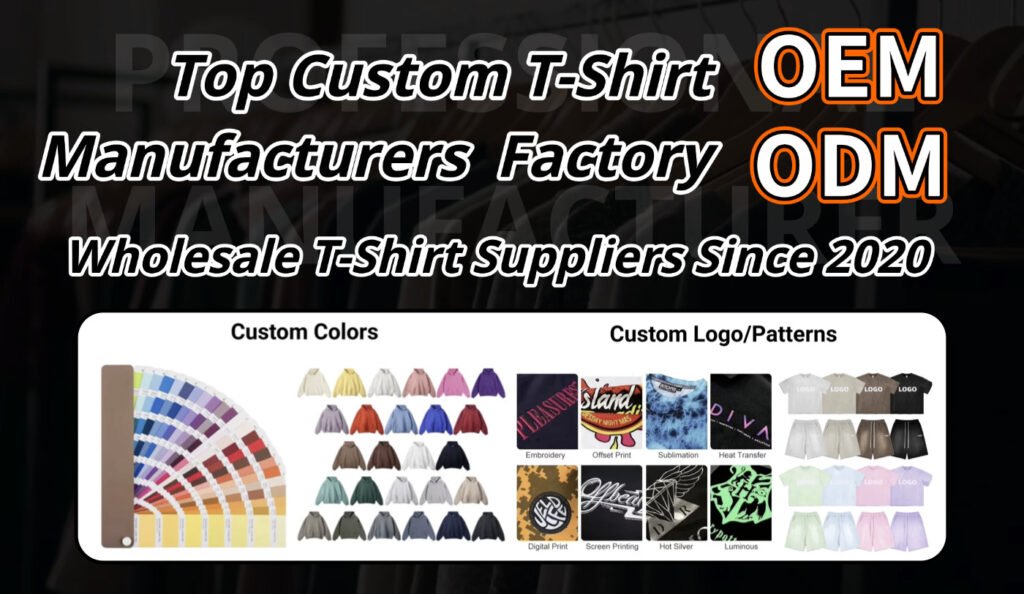
Heyisenlin has focused on producing sweatshirts and T-shirt sets for 5 years, boasting an 8,000-square-meter standardized factory, 100 skilled employees, and 60 professional production machines. We not only provide standard OEM manufacturing but also offer one-stop OEM & ODM customization services from design to mass production.
This article will systematically analyze:
- How to choose a truly professional T-shirt print factory
- Key processes in OEM/ODM customization
- How to ensure stable mass production quality
- How to reduce customization risks and improve efficiency
If you are looking for a long-term custom T-shirt factory, we hope this content will provide you with clear, practical, and actionable guidance.
What to Look For in a Professional Custom T-Shirt Manufacturer
Manufacturing Experience and Production Capacity Stability
When evaluating a custom t-shirt manufacturer, production scale and organizational capabilities are primary indicators.
Heyisenlin boasts:
- 5 years of experience in custom garment manufacturing
- 8,000㎡ of standardized production space
- 100 stable production team members
- 60 professional production equipment
Why is scale important?
- Scale represents production scheduling capability
- Scale means controllable delivery times
- Scale means more stable implementation of standardized quality control
Small and medium-sized workshops often experience delivery delays during peak seasons, while factories with stable production lines can ensure on-time delivery through decentralized production.
Does the factory have comprehensive in-house printing capabilities?
A qualified t-shirt print factory should possess multiple printing technologies:
- Screen printing (suitable for large batches, stable colors)
- Digital direct-to-garment (DTG) (suitable for small batches of complex patterns)
- Heat transfer printing (suitable for high-detail patterns)
- Embroidery (suitable for high-end brand logos)
Recommendation:
- For orders of 500 pieces or more, prioritize screen printing.
- For small batches or multi-color gradients, choose DTG.
- For 3D brand effects, choose embroidery.
Correct technology matching effectively controls costs and ensures stable results.
OEM & ODM Customization Services: From Idea to Bulk Production
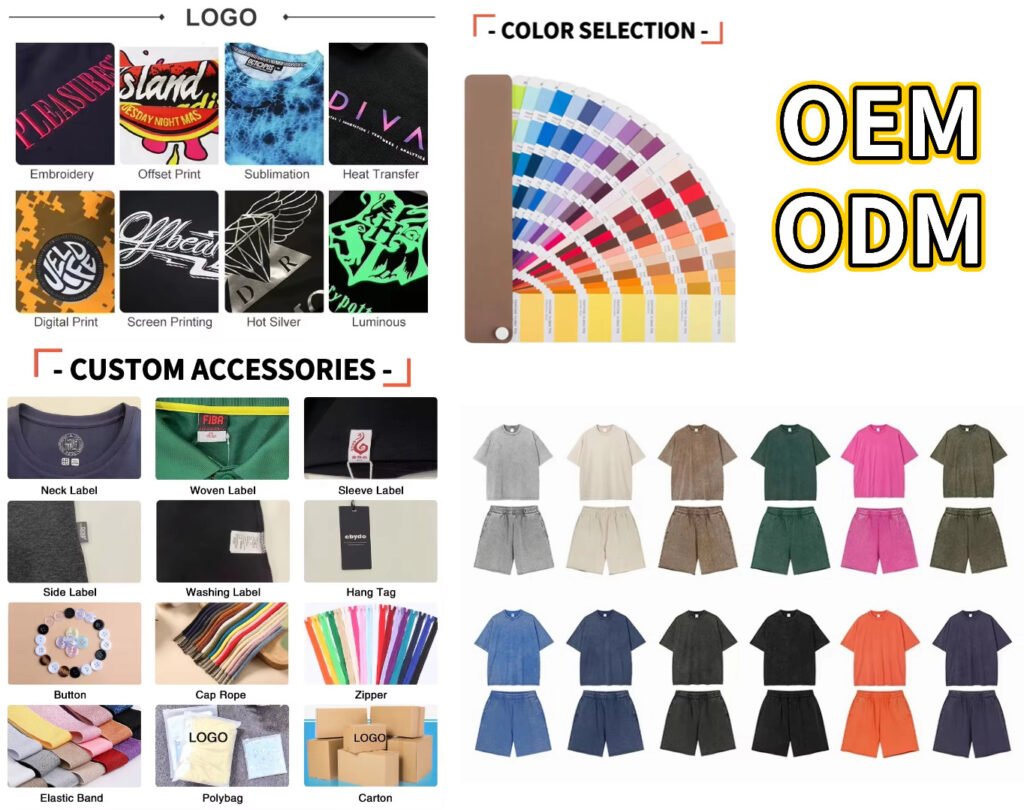
Logo and Graphic Customization
We recommend clients provide:
- AI / PSD / PDF vector files
- Pantone color standard
- Specific printing position and size specifications
Using a Pantone color chart can effectively reduce the risk of color difference.
Professional Practice:
Confirm the color difference ΔE value is controlled within a reasonable range during the sampling stage to avoid significant color deviation in the bulk order.
Fabric and Color Customization
Common Fabric Options:
- 100% Cotton (Breathable and Comfortable)
- CVC Blend (More Durable)
- Polyester-Cotton Blend (More Cost-Effective)
Recommended Weight:
- 180gsm: Basic Size
- 200–220gsm: High-Quality Size
- 240gsm and Above: High-End Heavyweight Size
It is recommended to confirm the following before placing an order:
- Shrinkage Rate
- Weight Error Range
- Hand Feel Requirements
Design and Sampling Process
Standard Process:
- Provide tech pack
- Confirm fabric
- Sample production (7–10 days)
- Confirm size and printing position
- Mass production
It is recommended to focus on checking the following during the sample stage:
- Size suitability for the target market
- Print fastness
- Neckline and stitching craftsmanship
Private label and packaging
OEM services include:
- Customized washing labels
- Hang tag design
- Barcode labeling
- Customized packaging bags
Note:
For export to European and American markets, attention should be paid to the compliance of composition labeling and country of origin labeling.
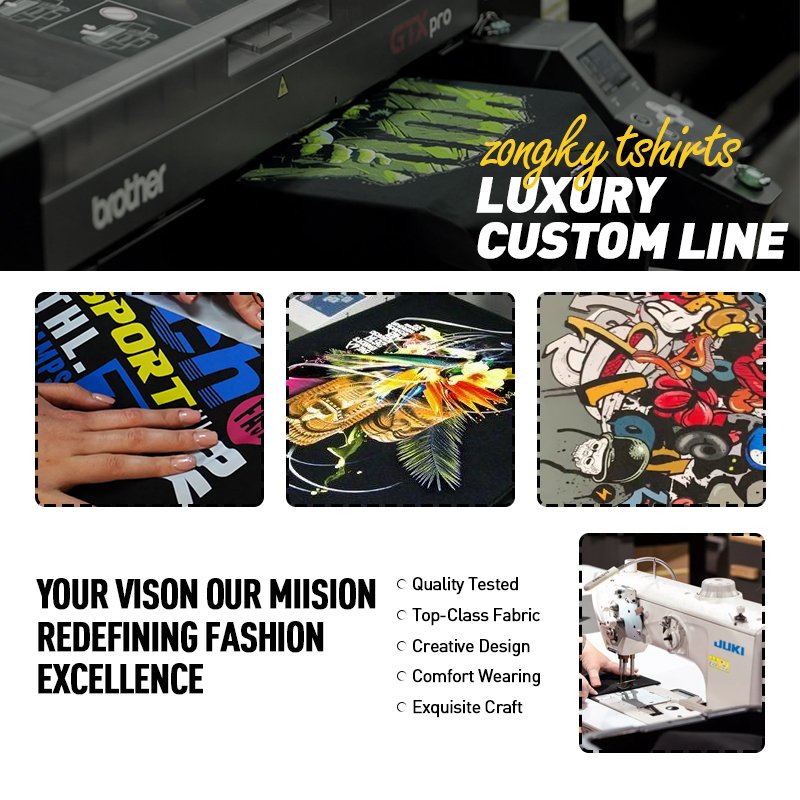
Inside Our T-Shirt Print Factory: Equipment & Workflow
8000㎡ Standardized Production Layout
Production zones include:
- Automated Cutting Area
- Printing Area
- Sewing Area
- Ironing and Packaging Area
Zoning management reduces the risk of cross-contamination and quality fluctuations.
60 Professional Machines Ensure Stable Output
Including:
- Automatic Cutting Machine
- Industrial Overlock Machine
- Multi-head Embroidery Machine
- Automatic Screen Printing Machine
The level of equipment modernization directly affects production efficiency and consistency.
Lean Production Process
The process includes:
- Order Assessment
- Material Procurement
- Production Scheduling
- In-process Inspection
- Finished Product Inspection
Proper production scheduling can control the regular production cycle within 15–25 days (depending on quantity).
| Start Your order | Thomas@heyisenlin.com |
Choosing a truly professional custom t-shirt supplier is not just about selecting a production line, but about choosing a long-term, stable manufacturing partner.
Heyisenlin, with 5 years of focused manufacturing experience, 8,000㎡ of production space, a team of 100 people, and 60 pieces of professional equipment, is committed to providing reliable OEM & ODM customization services to global brands.
If you are looking for a stable custom t-shirt supplier or a reliable t-shirt print factory, we hope the process suggestions and quality control methods provided in this article will help you make a more rational decision and successfully create your own high-quality custom apparel products.